

Why Did I Get Married Again? Review: Marriage, Family, Friendship and the Power of Healing
Why Did I Get Married Again? isn't simply about why we get married.
It's about why we love, why we forgive, why we heal—and why we keep showing up for one another.
by: LaCrystal Parker

Tyler Perry’s Why Did I Get Married Again? was more than a movie about marriage for me. It was a movie about growing up, growing older, raising children, confronting the past, breaking generational cycles, finding yourself and realizing how important family and friendships become as life changes. Set against the beautiful backdrop of France, the story brings the couples and their now-adult children together for Jasmine’s wedding. What begins as a celebration of a new marriage quickly becomes an opportunity for the older generation to confront their own relationships, mistakes and unfinished emotional business.
And honestly, I thought the movie was awesome.
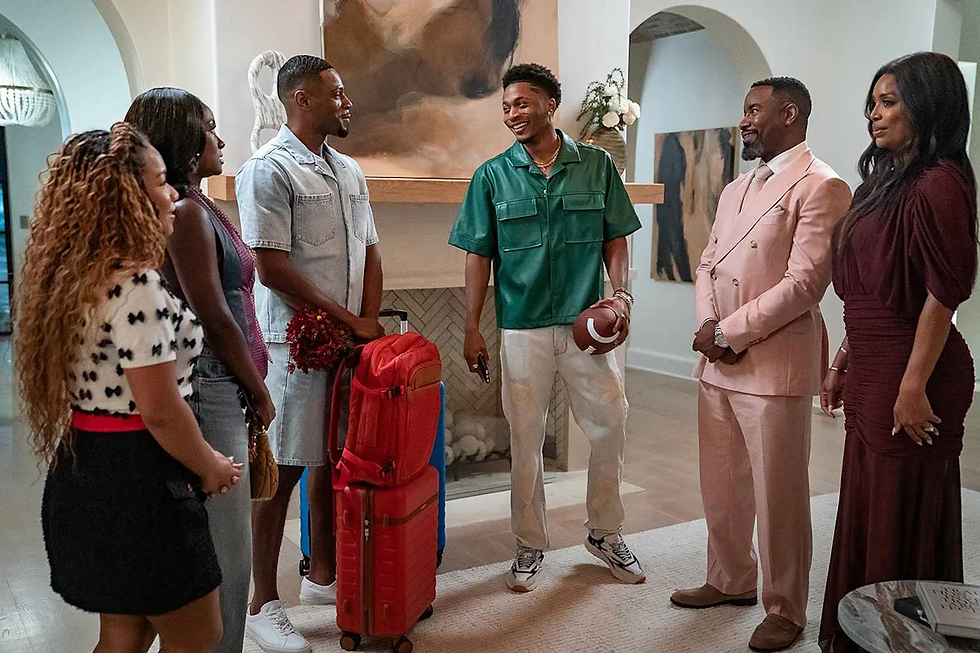
'Why Did I Get Married Again?'
Credit: Chip Bergmann/Perry Well Films 2/Netflix
The move takes place in beautiful Lake Como, Italy
And we have to talk about France. The setting is gorgeous. The scenery provides this romantic, almost dreamlike background for Jasmine's wedding and gives the movie a visual beauty that complements the story. But I also loved the contrast. They're surrounded by beauty while confronting some of the ugliest and most painful parts of their past.
Everyone arrives in France carrying something. Some need forgiveness. Some need healing.
Some need freedom. Some need accountability. Some need to let their children grow up.
And some simply need to accept that life has changed. In that sense, France becomes more than a beautiful destination. It becomes the place where these characters stop long enough to look at where they've been and where they're going.
A Wedding Brings Everyone Back Together
Jasmine’s wedding is the reason everyone gathers in France, but the wedding becomes almost a mirror for everyone else's relationships. Here is a young woman preparing to begin her marriage while surrounded by people who know firsthand that marriage isn't always the fairy tale we imagine when we're standing at the altar. They've experienced infidelity, divorce, children, illness, disappointment, forgiveness, friendship and second chances.
The older generation has something the younger generation doesn't have yet: experience.
But the movie makes an important point—they aren't perfect simply because they're older.
In fact, one of my favorite parts of the movie was watching the adults finally acknowledge their pasts. It reminded me that sometimes our parents give us advice not because they always did everything correctly, but because they know firsthand what making the wrong decision can cost you. Wisdom doesn't always come from getting everything right. Sometimes wisdom comes from surviving what you got wrong.
Marcus May Have Had the Biggest Growth
Marcus really stood out to me. We know his history. We know the mistakes he's made, and Angela certainly hasn't forgotten them. But the Marcus we see today isn't exactly the same man. Life grew him up. Marriage, fatherhood, mistakes, consequences and simply getting older seem to have humbled Marcus and given him a different understanding of life.
I could especially see his growth when he spoke at the wedding. His words carried weight because they weren't coming from someone who had lived a perfect life.
They were coming from someone who had lived long enough to understand some things differently. Marcus's character made me think about something important:
Should someone have to spend the rest of their life being judged by who they were at their worst? Growth doesn't erase accountability. The people you hurt can still carry the consequences of what you did. But people can also change. Sometimes we need to give our younger selves some grace. We look backward with everything we know today and judge the younger version of ourselves for not having today's wisdom. You can take responsibility for your past without spending the rest of your life hating yourself for it.
Angela May Still Need Healing
Marcus may have changed, but that doesn't necessarily mean Angela has completely healed. That's particularly noticeable through their son. As Marcus Jr. displays some of the behaviors of the younger Marcus, Angela appears to be reminded of what she experienced with his father. Suddenly she's not only dealing with her son's behavior. She's being confronted with memories. That made me think Angela and Marcus could still benefit from therapy. Saving a marriage and healing a marriage aren't necessarily the same thing.
You can decide to stay together and still have emotional wounds that need attention.
And when unresolved wounds begin affecting how you parent the next generation, that's when generational trauma can continue. Breaking generational cycles requires more than staying together. It requires healing what happened while you were together.
And Marcus Jr. definitely provides some comedy along the way. His behavior with women—and his mother's hilarious responses to his horniness—give the movie some much-needed laughs between the heavier conversations.
Sometimes We Have to Let Our Adult Children Find Their Own Way
I also appreciated the difference between Marcus and Angela's approaches to their adult son. Angela wants to intervene because she recognizes behavior she's seen before. Marcus seems to believe that eventually the right woman will come along and that their son has to find his own way. That raised another question for me: How do we parent our children after they become adults? There comes a point where guidance has to replace control.
We can teach our children. We can warn them. We can tell them what happened to us. But eventually they have to make decisions, experience consequences and figure out who they are. Sometimes parents want to micromanage their adult children's lives because we know what can go wrong. But our wisdom cannot replace their experience.
Ross Found Herself—and Found a 27-Year-Old Man Too
Now, Ross! When everybody arrives in France and Ross's 27-year-old new man joins them, I immediately thought: LAWD! The age difference is noticeable, and the relationship naturally raises questions about older women dating younger men. But as her story develops, I think there's something deeper happening. Ross talks about finding herself. After marriage, motherhood and divorce, she has reached a stage where she is discovering who she is outside of being somebody's wife or somebody's mother. Women can spend decades fulfilling roles for other people and eventually reach a point where they ask: Who am I when I'm no longer living primarily for everybody else? Finding yourself doesn't necessarily mean becoming someone new. Sometimes it means finally having the freedom to meet the woman you've always been.
And perhaps Ross's younger relationship isn't simply about trying to feel young again. It represents her willingness to experience life differently.
Wesley Shows Us That Adult Children Still Carry Childhood Pain
Ross's son Wesley brings another dimension to the story. His anger toward his mother doesn't disappear simply because he's now an adult. When he exposes information about Ross's relationship in front of everyone, you can feel that something deeper is happening.
There's resentment. And that's another reality families have to face: children grow up, but childhood emotions can grow up with them. Being in your 20s doesn't automatically heal whatever happened when you were 10, 12 or 15. At the same time, adult children eventually begin seeing their parents differently. You start realizing that Mom and Dad weren't simply "Mom and Dad." They were human beings. They had desires, fears, weaknesses, relationships, mistakes and trauma of their own. Maybe part of becoming an adult is accepting that our parents were people before they were our parents.
“What Goes on in This House Stays in This House” Doesn't Heal Families
One of the strongest messages I took from the movie was the conversation surrounding the old idea: “What goes on in this house stays in this house.” That mentality doesn't necessarily heal families. There is a difference between privacy and secrecy. When physical abuse, emotional abuse, addiction, betrayal or trauma is happening inside a family, refusing to talk about it doesn't make it disappear. Sometimes silence simply passes the pain to another generation. You cannot heal what nobody is allowed to acknowledge. And this movie shows what can happen when older adults finally start talking about their past. They admit they weren't perfect. They made mistakes. They did things they aren't proud of. But acknowledging those mistakes creates an opportunity for their children to understand them differently. Breaking generational trauma sometimes requires breaking generational silence.
Mike Raises a Different Question About Aging
Mike's storyline made me think about men and aging.
After everything he's experienced, including beating cancer, there still seems to be a part of Mike connected to an earlier era of his life. That made me wonder: Are some men afraid of getting older, or are they afraid of losing the identity they associated with being young? There's absolutely nothing wrong with remaining youthful, adventurous and excited about life.
But staying youthful and refusing to grow are two different things. As children become adults, relationships change and our bodies change, we eventually have to discover who we are in the next season. Sometimes holding onto an earlier version of ourselves may feel safer than admitting that chapter is over. But growing older doesn't have to mean becoming less alive.
Maybe the challenge is learning how to carry the best parts of our younger selves forward without trying to live permanently in the past.
The Power of Family and Friends
Ultimately, this is what made me love Why Did I Get Married Again?
It reminded me how important marriage, family and friendship really are.
These friends have watched one another go through different seasons of life.
They've gotten married. They've had children. They've made mistakes. They've hurt one another. They've experienced divorce. They've dealt with illness. They've grown older.
They've changed. And after all those years, they're still showing up. Jasmine's wedding represents another generation beginning its journey while the generation before her looks back at everything marriage and life have taught them. Nobody standing in that room is perfect. And maybe that's the point. Family isn't about pretending we never made mistakes. Friendship isn't about only showing up when everything is good. And marriage isn't about two perfect people somehow creating a perfect life. It's about growing, accountability, and forgiveness. It's about knowing when to hold on and when to let go, allowing your children to become adults. It's about telling the truth about things families once kept hidden. And sometimes it's about finding yourself all over again. Why Did I Get Married Again? may begin with the question of marriage, but I walked away thinking about something even bigger:
We need one another.
Life changes. People change. Children grow up. Relationships evolve. But having family and genuine friends beside you as you navigate those changes can be one of life's greatest gifts.
Rating: ⭐⭐⭐⭐⭐ — 5/5


Comments